
Buying Land With No Utilities in Texas: 5 Questions to Ask
You're standing at the edge of a few open acres. Tall grass, a line of trees in the back, nothing but sky. The price looks great, and you can already see the house, the porch, maybe a shop out back.
Then the practical voice in your head asks: where does the power come from? The water? Where does everything go when you flush?
Buying land with no utilities in Texas can be a smart way to build a custom home, hold an investment or save a place for later. It also takes more homework than buying a lot that's already connected. Around Houston, Charles and I tell land buyers to look past the price and the open acreage and ask what it will really take to make the land usable.
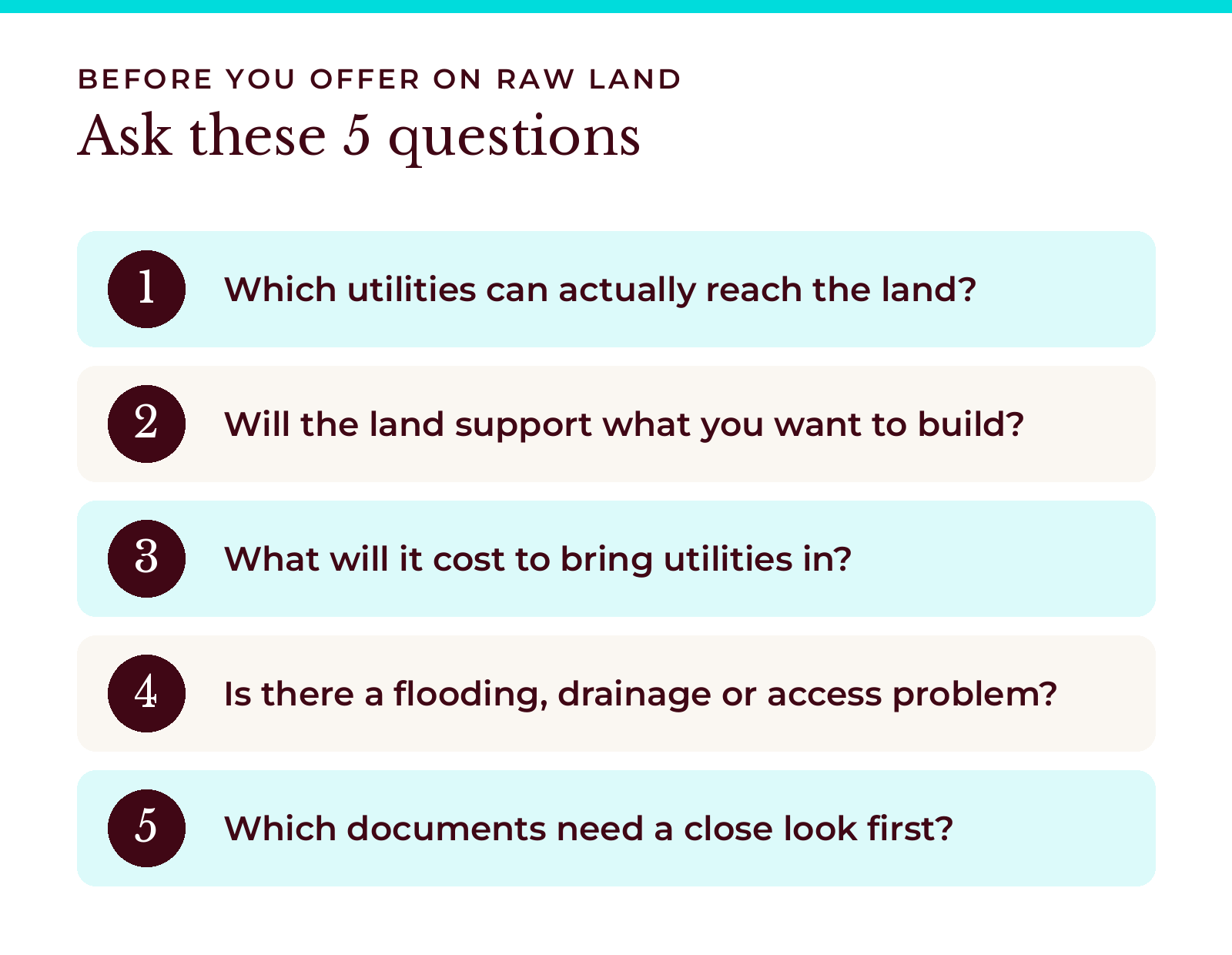
Utilities change everything: what you can build, how long it takes and whether the numbers still make sense. Here are the five questions we walk through before anyone makes an offer on raw land.
Which Utilities Can Actually Reach the Land?
That power line running along the road is a promising sign. It's not a promise. Your parcel may not be able to connect to it, and the same goes for a water main. Each provider may need to confirm availability, connection requirements, capacity and any extension work.
Who serves the land also depends on where it sits. A parcel inside Houston city limits, one in unincorporated Harris County and one out toward Conroe can have very different setups.
So before you get attached, find out who the electric provider is. Ask whether there's public water or you'd need a private well, and whether public sewer is available. Check on natural gas if you want it. And ask whether line extensions or other infrastructure would be needed.
Nearby utilities aren't confirmed service. Get it from the providers themselves.
Will the Land Support What You Want to Build?
Go back to that picture in your head of what you want on the land. A single-family home, a larger custom home or another permitted use can each come with different site requirements. Lot dimensions, access, drainage, soil, easements and development rules all play a part.
Ask the planning or permitting department about permitted uses, building requirements, setbacks and restrictions. Then read the recorded deed restrictions and any subdivision documents.
The goal is simple: know your project is possible before you commit to the purchase.
What Does It Cost to Bring Utilities to Raw Land?
This is where the great price can start to shift. Water and wastewater deserve the most attention.
Don't assume a private well or a septic system will be allowed or practical on a given piece of land, whether it's in New Caney, Porter or anywhere else. Site conditions, regulations and approval from the right authorities come first.
Can you count on septic?
Not until it's confirmed for that site. According to the Texas Commission on Environmental Quality, a permit and an approved plan are required to build and operate an on-site sewage facility, which is what most of us call a septic system.
TCEQ notes it's often not the permitting authority itself, so you'll usually work with the local authority for that county. The process starts with a preconstruction site evaluation by a licensed site evaluator or professional engineer, including a survey of the lot and a soil analysis where the system would go.
Build a rough budget before you commit
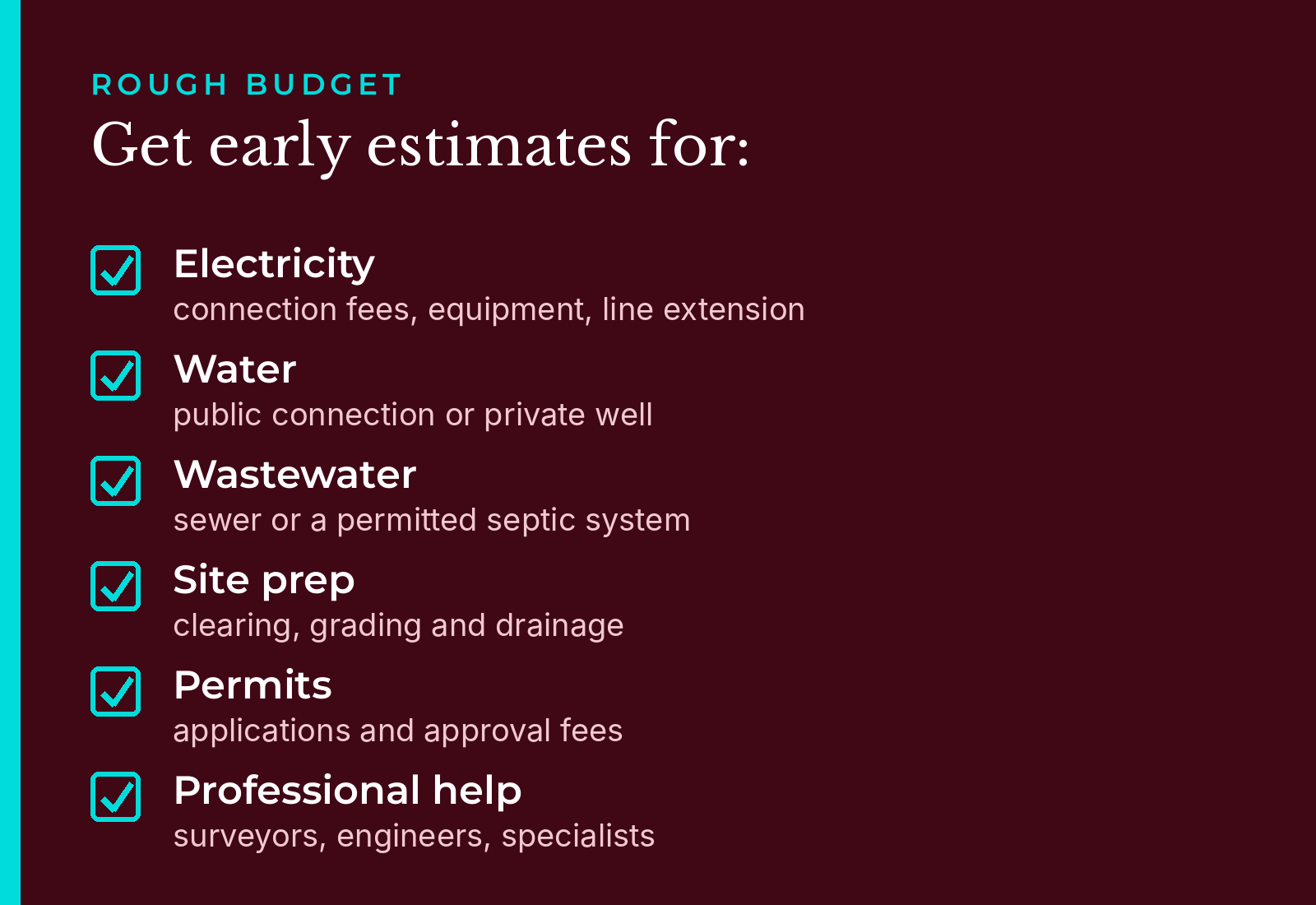
Get early estimates for each of these:
Electricity: connection fees, equipment and any line extension
Water: a public connection or private well requirements
Wastewater: sewer availability or septic feasibility
Site preparation: clearing, grading and drainage
Permits: applications and approval fees
Professional help: surveyors, engineers and other specialists
A lower asking price can still mean more work and more money than a lot with infrastructure already in place.
Is There a Flooding, Drainage or Access Problem?
Utilities are only part of the picture. In the Houston area, drainage and flood exposure matter just as much, from Kingwood to the smaller towns north of the city.
Start by checking whether the parcel sits in a mapped flood hazard area. FEMA's Flood Map Service Center lets you search flood maps by address. Walk the land, too. Look for drainage easements and nearby ditches, channels or other drainage features, and have a qualified professional look at grading and site preparation.
Then confirm legal access. The land needs access from a public road or through a properly documented easement. That driveway or dirt path you drove in on doesn't prove a legal right to use it.
What Documents Should You Review Before Making an Offer on Land?
A seller's description is a starting point, not the final word. Confirm the key details through records and professionals:
A current survey, compared with the legal description
Title information
Recorded easements
Deed restrictions
Any subdivision documents that apply
Make sure your purchase contract gives you enough time, and the right terms, to finish your due diligence. A qualified real estate professional should review the contract, and in some cases a real estate attorney too.
Is Buying Land With No Utilities in Texas Right for You?
It can be a great choice when the land fits your plans and you understand what it will cost to get it ready.
Look at every parcel on its own. Two pieces of land a mile apart can differ a lot in utility access, development rules and site conditions, whether you're looking in Spring, Kingwood, New Caney, Porter or Conroe.
If you'd rather start with land that already has a home on it, you can browse homes with acreage too. Either way, bring utility providers, local authorities, inspectors and surveyors in before you commit.
Buying Land With No Utilities FAQ
Can I buy land in Houston that has no electricity or water?
Yes. Vacant land can be bought without existing utility connections. Just confirm which services can be provided and what connection work would be needed first.
Can I put a well and septic system on land without public utilities?
Possibly. It depends on the property and the local requirements. Confirm both are permitted and workable for that specific site before you count on them.
Does vacant land near Houston need a flood check?
You should look into flood exposure and drainage before you buy. Review the flood maps for the address and consider a site-specific assessment, especially if you plan to build.
What should I check before making an offer on undeveloped land?
The legal description, survey, title, access rights, easements, deed restrictions, utility availability, flood information and development requirements.
Let's Look at the Land Together
Land can be a great opportunity when you go in with the right questions. Charles and I would be glad to help you organize your due diligence, review the property information and flag what to ask before you commit. Reach out to us whenever you're ready, and you can learn more about us anytime.
