What Is a MUD Tax in Houston? What Buyers Should Know Before Making an Offer
When Charles and I bought our first home together, we were so excited. We loved the house, we loved the neighborhood and we loved the price. Then our first full tax bill came, and there was a line on it we hadn't really planned for: the MUD tax. Our agent at the time never sat us down and walked us through it, so we found out the hard way.
That moment stuck with us. It's a big reason we make sure every buyer we work with understands the MUD tax before they write an offer, not after they move in.
If you're shopping almost anywhere around Houston, from Atascocita and Humble to Cypress, Katy, Spring, Crosby or Conroe, there's a good chance the homes on your list sit in a MUD. Here's what that means for you.
What Is a MUD?
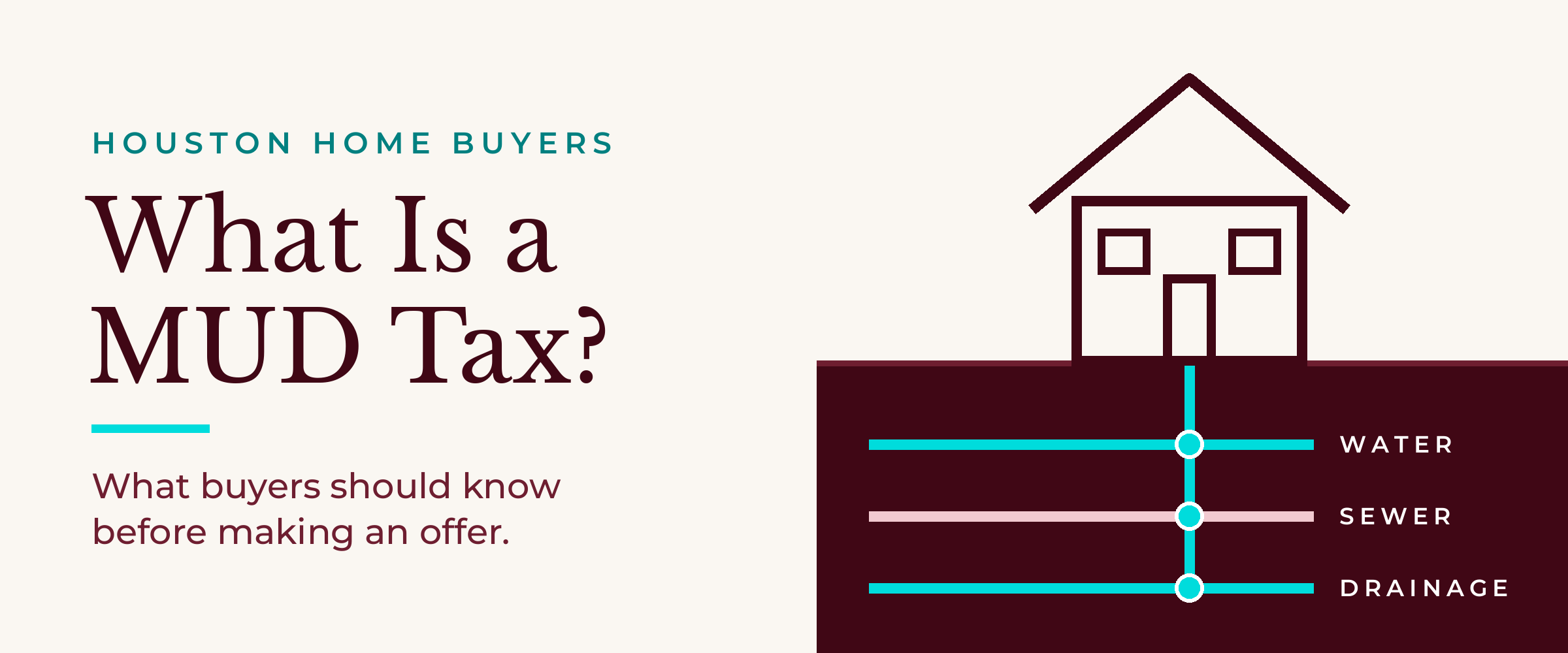
MUD stands for Municipal Utility District. In Texas, a MUD is a small local government that brings water, sewer and drainage to land outside city services. A lot of the Houston area grew this way. Before the first house goes up, someone has to pay for the pipes, the plants and the drainage, and the MUD is how that gets done.
The district sells bonds to pay for all of it. Voters in the district approve how much it can borrow, and the state's environmental agency, TCEQ, reviews most bond sales before they happen. Homeowners then pay a MUD tax every year to pay those bonds back and keep everything running.
How the MUD Tax Shows Up in Your Payment
The MUD tax is a property tax, charged per $100 of your home's taxable value, the same way your county and school district taxes are. It gets its own line on your tax bill.
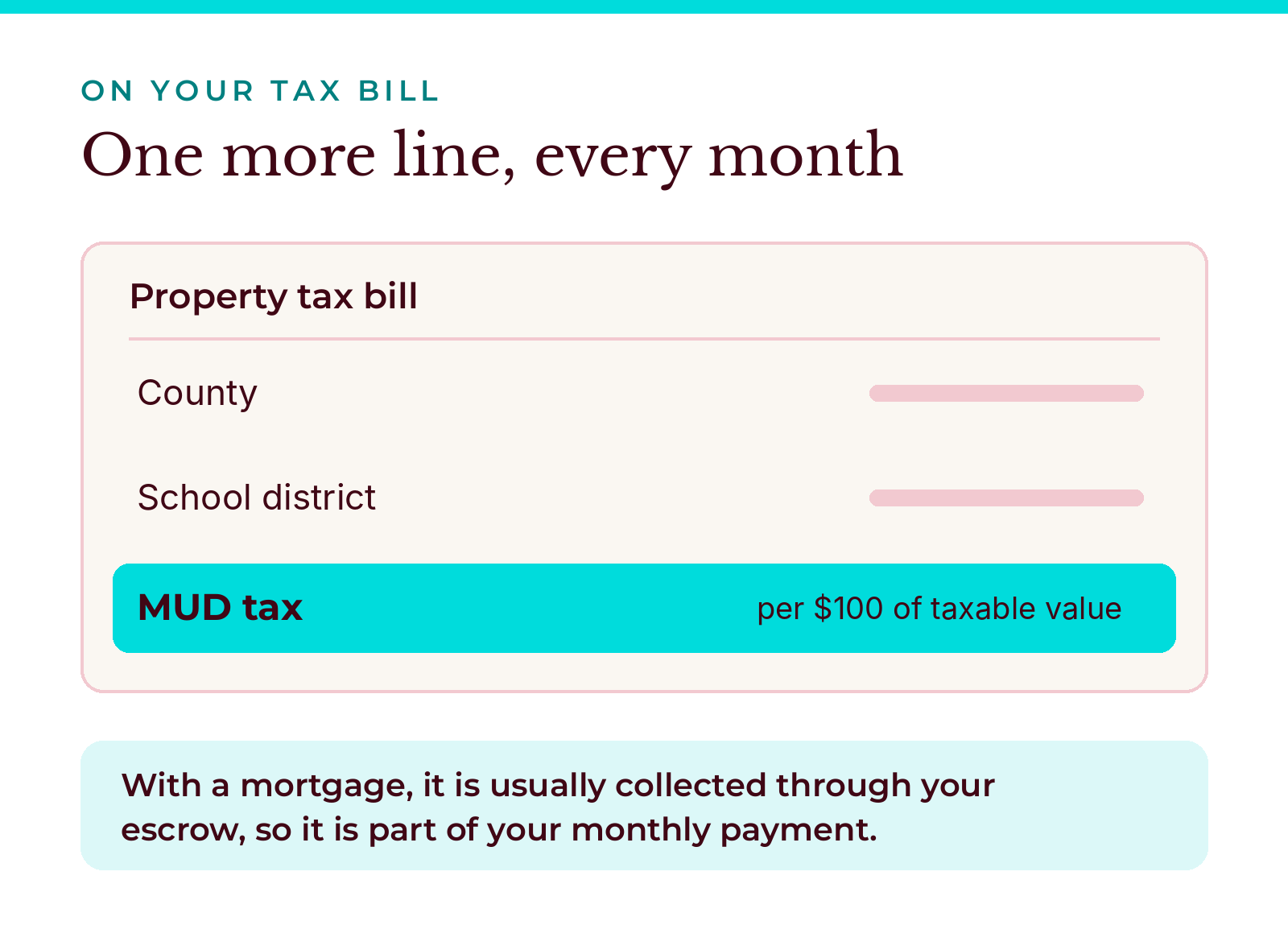
If you have a mortgage, it's usually collected through your escrow with the rest of your property taxes. So it doesn't just show up once a year. It's part of your monthly payment, every month.
And the rate can be very different from one neighborhood to the next. A newer district that's still early in paying off its bonds often has a higher rate than an older district that has paid most of its debt down. That's how two homes at the same price, a few miles apart, can come with very different payments.
Want to see real numbers? We broke down the MUD rates for Eagle Springs, The Groves, Fall Creek, Balmoral, Canyon Gate at Park Lakes and Summerwood in MUD Tax in Atascocita and Humble.
MUD vs. PID
You may also run into a PID, a Public Improvement District. A PID usually pays for things like landscaping, trails or other community improvements, and it's billed as an assessment instead of a tax rate. Some neighborhoods have a MUD, some have a PID, and some have both. Ask about both, and count both in your monthly payment.
How to Check Before You Make an Offer
Ask your agent for the full tax rate. Charles and I pull the total tax rate for every home our buyers are serious about, MUD included, so you can compare homes side by side.
Look up the address. The county appraisal district lists every taxing unit on a property, and each one posts its current rate.
Read the seller's MUD notice. Texas law requires the seller to give you a written notice before you sign a binding contract when a home is in a MUD. It shows the district's tax rate, the bonds voters approved and the bonds already issued. If you didn't get it before signing, Texas law lets you end the contract. An updated copy is signed and recorded at closing.
Run the real monthly payment. Use the full tax rate for that exact address, not a neighborhood average or a listing's estimate.
Is a MUD a Bad Thing?
Not at all. MUDs are a big part of why so many great Houston-area neighborhoods exist. They bring water, sewer and drainage to places that wouldn't have them otherwise, and a lot of these communities have newer homes, parks and amenities buyers love.
A MUD just means your monthly payment includes one more line. You want to know that number going in, not discover it on your first tax bill like we did.
Common Questions About MUD Taxes
Does the MUD tax ever go away?
Rarely. The rate often comes down as the district pays off its bonds, but most MUDs keep a tax for operations and maintenance, and the board sets the rate every year. It can go up if the district sells new bonds.
How is the MUD tax handled at closing?
Property taxes for the year are split between buyer and seller at closing, based on the closing date. After that, the tax is yours.
Is the MUD tax higher in new construction?
Often, yes, because newer districts are still early in paying off their bonds. Always check the rate for the exact address.
Can two homes in the same neighborhood have different MUD taxes?
Yes. Some neighborhoods are split between two or more districts, so the rate depends on the exact address.
Thinking About Buying in a MUD Neighborhood?
Charles and I help buyers compare the true monthly cost of every home, MUD and PID included, before they make an offer. Wherever you're looking in the Houston area, reach out to us and we'll walk you through the numbers for the homes you're considering.
